Welcome back to the Christmas traditions series. Today, we’re taking a look at Christmas in Japan.
In December, Japan looks like it is ready for Christmas. Cities light up at night. Store windows fill with trees, ornaments, and Santa Claus. Christmas music plays in shopping areas, train stations, offices, and restaurants. Bakeries line their shelves with seasonal cakes, and signs advertising special meals appear weeks ahead of time. To someone visiting from another country, it can look like Christmas is everywhere.
At the same time, daily life keeps moving. Offices stay open. Schools stay open. Trains run on schedule. There is no national holiday connected to Christmas, and there is no long break from work. Christmas fits into everyday routines instead of stopping them.
To understand why Christmas looks this way in Japan, you have to go back much further than December decorations and modern city life. You have to look at Japan’s religious history and the long path Christianity took to exist there at all.
For most of Japan’s history, religious life centered on Shinto and Buddhism. These belief systems shaped daily customs, seasonal events, and family traditions. Many holidays were tied to farming cycles, local shrines, and long-standing community practices. Christianity had no role in this structure.
Christianity first came to Japan in the mid-1500s, brought by European missionaries, including Jesuits from Portugal. At first, the message spread more quickly than later generations might expect. Some Japanese leaders allowed missionaries to preach, and a number of people converted to Christianity. Churches were built, and small Christian communities formed, especially in port areas like Nagasaki.
Within these communities, Christian worship took place openly for a short time. Christmas was observed as part of church life, centered on the birth of Christ. These celebrations, however, were limited to those communities and never became part of wider Japanese society.
That early period ended abruptly.
By the early 1600s, the Japanese government began to see Christianity as a threat to political authority and social stability. Christianity was banned. Missionaries were expelled. Japanese Christians were ordered to renounce their faith. Those who refused were punished, imprisoned, or killed.
Public Christian worship disappeared. Churches were destroyed or repurposed. Christmas vanished from public view.
Many Christians did not abandon their faith. Instead, they went underground. These believers are often called the Hidden Christians. They practiced secretly, passing down prayers, rituals, and beliefs within families. Over generations, Christian practices blended quietly with local customs as people tried to survive without being discovered.
During this long period, which lasted more than two hundred years, Japan also limited contact with the outside world. Foreign influence was tightly controlled. Christianity remained illegal. Christmas was not openly celebrated anywhere in the country.
For generations, December passed like any other month.
Japan reopened to the world in the mid-1800s during the Meiji period. The country began modernizing rapidly, adopting new technologies, government systems, and international trade. Western nations established relationships with Japan, and foreign residents settled in port cities.
Christianity was legalized again. Churches were allowed to reopen. Missionaries returned, and Japanese Christians were able to worship openly for the first time in centuries.
Even with these changes, Christianity remained a very small part of Japanese society. Christmas returned, but only within churches, foreign communities, and small Christian groups. For most people in Japan, Christmas still had little meaning.
The situation began to change slowly in the early 1900s.
Department stores, hotels, and Western-style schools began to introduce Christmas decorations and events. These early displays were often meant to appeal to foreign visitors or to present Japan as modern and connected to the wider world. Christmas was still not a religious holiday for most people, but it was becoming visible.
This gradual change was interrupted by World War II.
During the war years, Western customs were discouraged, and Christmas again faded from view. The holiday did not disappear completely, but it remained quiet and limited.
After World War II, everything changed.
Following Japan’s defeat, the country entered a period of rebuilding and transformation. American influence became strong, especially in cities. Movies, music, advertising, and consumer goods from the United States became part of everyday life. Western holidays entered public awareness in a new way.
Christmas returned to Japan during this period, but not through churches.
It returned through culture, commerce, and city life.
Stores decorated for Christmas. Advertisements used Christmas images. Gift giving became more common. Christmas music filled public spaces. Over time, people began to associate Christmas with lights, special meals, and shared time rather than worship or church attendance.
By the 1960s and 1970s, Christmas was widely visible across Japan, even though most people did not attend church.
Business played a large role in shaping what Christmas became.
One of the most well-known examples is Christmas dinner.
In the 1970s, a fast-food company launched an advertising campaign that connected fried chicken with Christmas. The idea was new, simple, and easy to adopt. People tried it. The idea spread. What began as marketing slowly turned into custom.
Today, many people in Japan order their Christmas meals weeks in advance. Long lines form on Christmas Eve. Fried chicken is treated as a special holiday food, even though it is available all year.
Christmas cake developed in a similar way.
Bakeries began selling special cakes for Christmas, usually light sponge cakes topped with whipped cream and strawberries. These cakes became closely linked with the holiday. Sharing a cake became an easy way to mark Christmas without changing daily routines or family schedules.
Cities shaped Christmas just as much as businesses did.
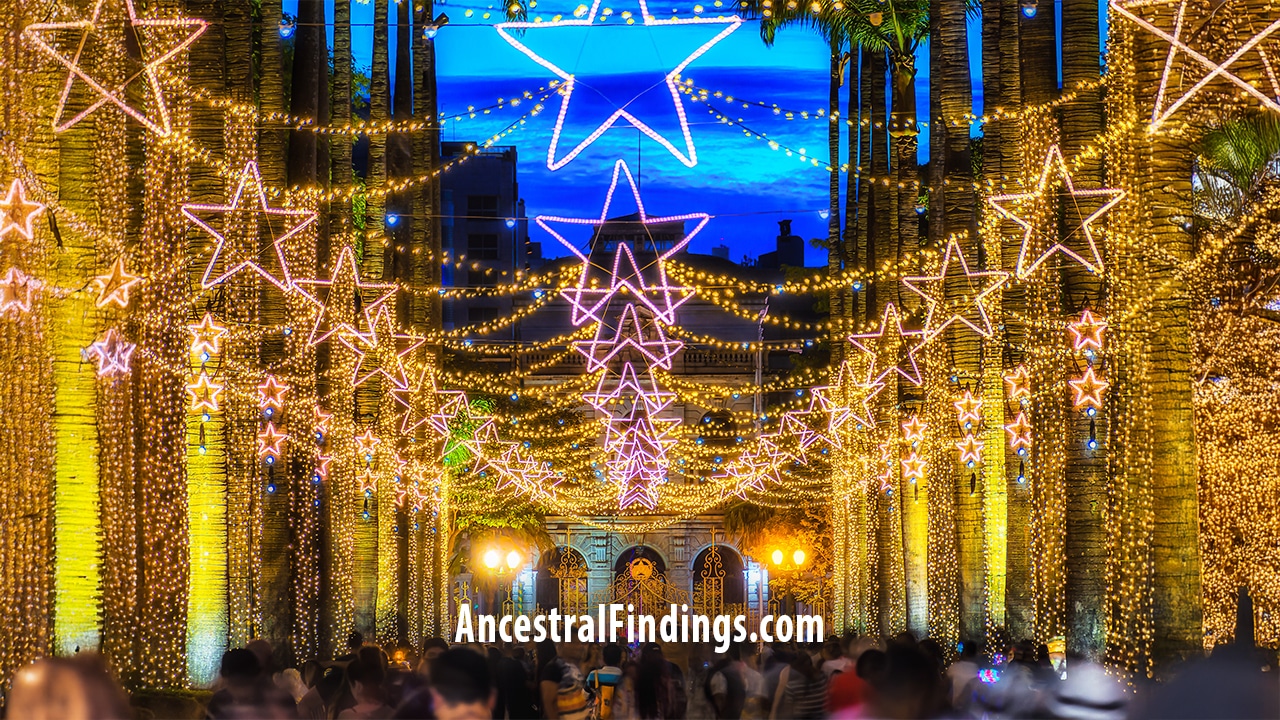
Unlike places where Christmas centers on home gatherings, Christmas in Japan often takes place outside. Shopping districts, office buildings, and train stations display elaborate lighting. Some cities became known for large winter light displays that draw crowds from across the region.
People walk through these areas after work. Couples meet in the evenings. Friends take photos. Christmas becomes something you experience while moving through the city rather than gathering around a table at home.
Christmas Eve plays a larger role than Christmas Day.
Christmas Eve is often treated as a special evening. Couples go out to dinner. Restaurants fill up early. Gifts are exchanged, usually between couples rather than within large family gatherings.
Christmas Day itself is usually a normal workday. Offices and schools remain open. There is no national holiday connected to Christmas, and daily schedules continue.
Family traditions follow a different pattern.
The most important family holiday in Japan is New Year’s. That is when people return home, take time off work, and take part in long-standing customs. Compared to New Year’s, Christmas plays a smaller role in family life.
Families may set up a small tree, share a cake, or give gifts to children, but Christmas does not replace older traditions.
Christian churches continue to celebrate Christmas in Japan.
Churches hold Christmas Eve and Christmas Day services that focus on the birth of Christ. Scripture readings, prayer, and music are central parts of these services. Christians attend, along with visitors who are curious or interested.
Nativity scenes appear in churches and sometimes in schools or public displays. For Christians in Japan, Christmas remains centered on the birth of Christ, even though most of society observes the season in a different way.
This creates a unique situation.
In Japan, Christmas exists in two forms at the same time. For a small Christian population, it is a religious holiday centered on Christ and church worship. For most others, it is a cultural event shaped by modern life, cities, and business.
Christmas in Japan was not passed down through generations in the same way it was in many other countries. It was adopted slowly. Pieces were chosen and reshaped over time. Gradually, it became part of the calendar.
This history shows how a holiday connected to the birth of Christ traveled across cultures, disappeared for centuries, returned through new influences, and became part of everyday life in a country where Christianity was never the main faith.
Christmas in Japan does not stop the world. It moves alongside it.
And that is how Christmas is celebrated in Japan.