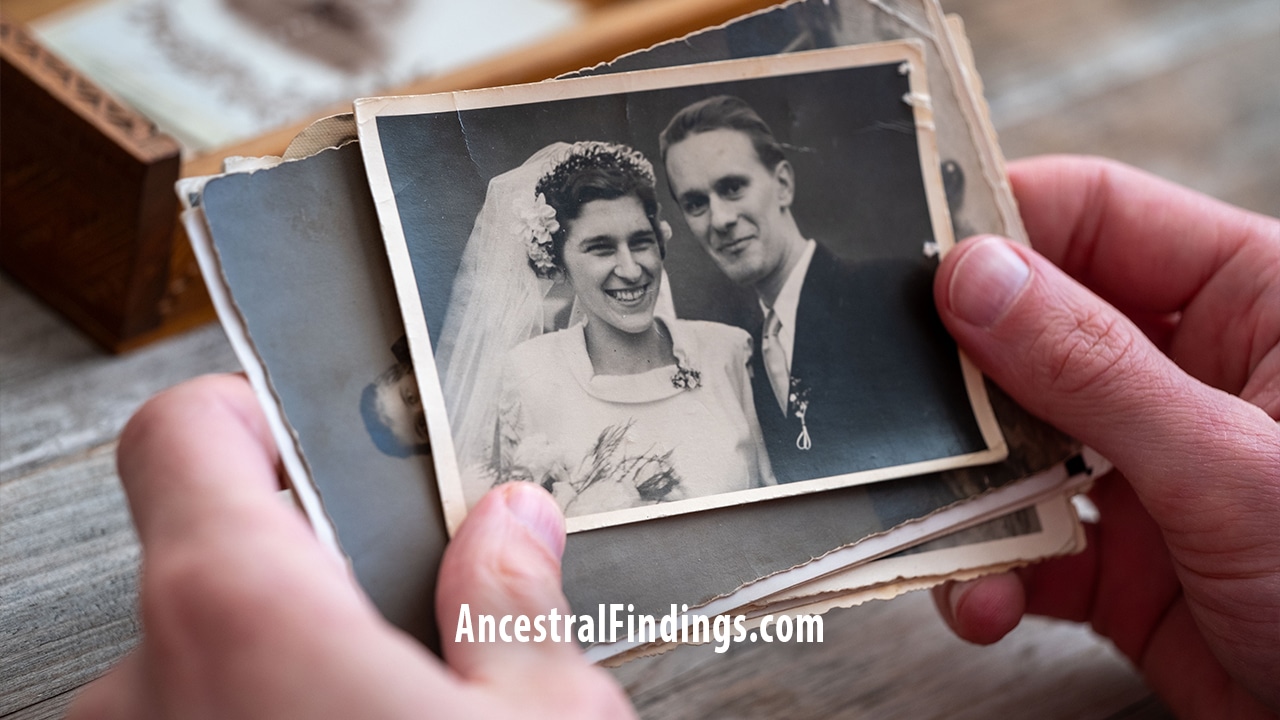
There are times in genealogy when the records speak clearly. Names line up, dates behave, and places make sense. You can follow a life forward with little resistance.
Then there are times when the trail stops.
Not with a dramatic ending. Not with a warning. Just silence.
That silence is not rare. It shows up in nearly every serious family history project, and it is where many family trees start to drift away from evidence.
This story sits inside that silence. It is about a man named Samuel Carter, a name common enough to create its own challenge. When a name is shared by many people, it becomes easier to attach the wrong records to the right person, especially when there is a gap, and you want to close it quickly.
The goal here is not to invent what happened in the missing years. The goal is to learn how to handle missing years without turning guesses into facts.
What We Know About Samuel Carter
The facts we have are simple, and they matter because they are the only solid ground we can stand on.
In the 1850 census, Samuel Carter appears in western North Carolina.
What the record shows.
- He is 26 years old.
- He was born in North Carolina.
- His occupation is laborer.
- He is single.
- He is living in a household headed by an older couple with a different surname.
That last point is small but important. It suggests Samuel is not yet rooted. He may be boarding, working for wages, living with extended family through a maternal line, or staying where work is available. The census does not explain the relationship, so we treat it as a clue, not a conclusion.
Ten years later, Samuel appears again in the 1860 census.
This time in southern Indiana.
What the record shows.
- He is married to a woman named Margaret.
- They have two children under the age of five.
- His occupation is farmer.
Two records, two states, and a full decade between them where he leaves no obvious paper trail.
No clear land record that places him earlier in Indiana.
No surviving marriage record that explains when and where he married Margaret.
No tax list that reliably shows him year by year.
No probate file that links him to family members who might explain the move.
Why This Is Where Trees Go Wrong
When the records go silent, researchers often feel pressure to fill in the space. Silence makes people uncomfortable, and it invites invention.
You have probably seen versions of this.
He must have gone west.
He must have served in the military.
He must have followed family.
He must have married on the way.
The word “must” is the danger sign. It turns an idea into something that sounds settled, even when there is no proof behind it. Once that happens, the next person copies it, and the assumption spreads like it is a documented fact.
A missing decade is not an invitation to build a story. It is a boundary line that tells you where certainty ends.
That boundary is valuable information.
What the Gap Actually Tells Us
Even when records are missing, the gap is not empty.
From 1850, we can infer that Samuel is young, mobile, and likely working where work can be found. He does not appear to own property yet, and he is living outside a household that shares his surname.
From 1860, we learn that Samuel’s life looks more established. He is married, he has small children, and he is farming. Those two children suggest the marriage likely happened early in the decade, though we cannot claim a year without evidence.
So the missing decade is full of major life events.
A move.
A marriage.
The births of children.
A change in occupation.
A shift from wage laborer to farmer.
The problem is not that nothing happened. The problem is that we cannot see it clearly.
Why Records Go Missing
Before you assume the person disappeared, it helps to remember that record keeping was uneven, and preservation was never guaranteed. Here are common reasons a decade can go quiet.
- Record loss. Courthouses burned, floods happened, books were misplaced, and some counties simply did not keep records consistently in certain years.
- Records existed but were never preserved. Church records are a classic example. Many were never deposited in an archive, and many were lost when congregations shut down.
- Tax lists do not always capture the right people. Tax records often focus on heads of household and property owners. A young man without land may not appear until later.
- Boundary and county changes. A person may not have moved far, but the county line shifted, or a new county was formed, and the records are filed under a different jurisdiction.
- Spelling and indexing problems. A surname can be recorded several ways, and a transcription error can hide a person in plain sight.
- Poverty creates invisibility. People with fewer assets often generated fewer records. When Samuel later buys land and pays taxes, he becomes easier to track, not because he began existing, but because the record system began noticing him.
How to Work the Missing Years Without Inventing a Story
When you have two census points and a missing decade, you need a strategy. Here are practical, evidence-based steps that fit a case like Samuel Carter.
- Re read the census with a fine tooth comb. Do not just read the household. Read the neighborhood.
Look for:
Neighbors with the same birthplaces.
Surnames that repeat in both locations.
Clusters of families who appear to have migrated together.
- Identify the 1850 household he is living with. If Samuel is living with an older couple with a different surname, learn everything about that couple.
Research:
Their children and marriages.
Any Carter connections through daughters or sisters.
Their prior residences.
Their land, probate, and court records.
If Samuel is related, it might not be through the Carter name at all.
- Research Margaret as deeply as Samuel. In many problems like this, the spouse’s family is the key that opens the door.
Build a timeline for Margaret:
Where she says she was born across multiple censuses.
Which families in the area match her.
Whether her possible parents appear near Samuel in 1860.
If you can identify Margaret’s family, you may discover a migration pattern that explains Samuel’s move.
- Use tax records to narrow the arrival window. Even if tax lists are imperfect, they can still help you narrow years.
Try:
Tax lists for likely counties in Indiana, year by year if available.
Comparing first appearance on tax lists with first appearance on deeds.
The goal is not to “prove the story.” The goal is to tighten the window where the move and marriage must have occurred.
- Search court minutes and road orders. When deed and marriage records are missing, county court minutes can sometimes place a man earlier than expected.
These records can include:
Road work assignments.
Small debt cases.
Licenses and permissions.
Guardianships.
Estate references where a young man appears as a buyer, witness, or neighbor.
- Do cluster research, not guesswork.If Samuel is hard to find, track the people around him.
Make a list of:
Neighbors in 1850 North Carolina.
Neighbors in 1860 Indiana.
Any families with North Carolina roots who appear in that Indiana community.
Then follow their records, especially deeds, probate, and court minutes. If Samuel traveled with others, he may appear in their documents even when he does not appear alone.
- Consider interim locations and routes. A move from North Carolina to Indiana often involved stops in Tennessee or Kentucky. If you cannot find Samuel directly, look for his cluster in those places.
Also consider:
Newspapers later in life, such as obituaries.
Church membership lists if they survive.
Cemetery records and sexton registers.
Later probate documents that might name relatives and origins.
How to Write the Gap into Your Tree the Right Way
One of the most important skills in genealogy is writing down what you do not know clearly, without filling it in.
When you encounter a gap, do this:
- State what is proven.
- State what is possible, and label it as possible.
- State what is unknown.
- Record your research plan, so future you knows what to check next.
That is how you avoid building on sand.
What Happens After 1860
In Samuel’s case, the records begin speaking again after 1860. Once he is established, he becomes easier to follow.
Land purchases show up.
Tax lists become more consistent.
A will is filed decades later.
This is not because he suddenly became real. It is because his circumstances changed in a way that created paper. Property and legal transactions create records, and stability creates patterns.
That is the real lesson hiding inside this gap.
Genealogy is not about finding everything. It is about knowing the difference between proof and possibility. It is about learning when silence means missing records, and when silence means you need to change your approach.
The past does not owe us complete stories. It gives us fragments. Our job is not to finish the story for it. Our job is to listen closely, keep the boundary of certainty clear, and keep working until evidence speaks again.