If your genealogy research feels stuck, the problem may not be missing records. It may be that you are asking the right questions in the wrong direction. Some of the most revealing information about your ancestors does not appear in their own records at all, but in the lives of the people who lived beside them. Learning to research sideways can change how you read records you already have and open paths you may not have considered before.
The Sideways Search Method
Somebody asked me last week if sideways research is really a thing, or if it is just another name for chasing random people. It is a real method, and when you use it with purpose, it can break problems that direct research cannot solve.
Genealogy often begins with a straight line. You start with yourself, move to your parents, then to your grandparents, and keep going backward as far as the records allow. That approach feels natural because it mirrors the way family trees are drawn. One generation leads to the next, and progress is measured by how far back the line extends.
For many people, this works well early on. Modern records are plentiful, names are clearer, and relationships are often stated. Birth certificates name parents. Census records list households. Marriage records identify spouses. The path feels direct.
Over time, though, many researchers hit the same wall. Records get harder to find. Names repeat across generations. Locations shift without explanation. Details get thinner. Eventually, progress slows or stops.
At that point, it is easy to assume the answers are gone. In reality, many of these problems continue because the research stays locked on the same narrow path. The search keeps pointing backward, even when the answers are sitting off to the side.
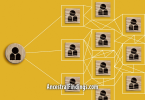
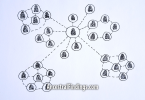
The Sideways Search Method offers a different way forward. Instead of concentrating only on parents and children, it shifts attention outward to the people who shared an ancestor’s life. By studying siblings, neighbors, associates, and others who appear alongside your ancestor, you can often uncover information that never appears in the ancestor’s own records.
This method does not require advanced tools or specialized training. It requires a change in perspective and careful attention to the names already in front of you.
Understanding What Sideways Really Means
Researching sideways means stepping outside the direct line of descent and examining the wider network an ancestor belonged to. Every person lived inside a family, a neighborhood, a church, or community, and a local economy. Records preserve those connections, even when they do not spell them out.
Sideways research may include siblings and half-siblings, whose lives often extend longer and leave more records. It may involve spouses of siblings, whose marriages introduce new families. It can include neighbors listed nearby in census records, people who appear as witnesses, bondsmen, or executors, or families who show up again and again in land transactions, tax lists, or church records in the same area.
It can also include people who moved at the same time and to the same places. Migration rarely happened in isolation. Families and neighbors often traveled together, settled near one another, and kept those connections for years.
Your ancestor may appear briefly in the records, sometimes only once every decade. The people around them often appear more often, across more record types, and with more detail. Those repeated appearances provide context, and context is often what turns fragments into a clear conclusion.
Why Direct Research Often Falls Short
Many ancestors did not leave extensive documentation. Some never owned land, so they do not appear in deeds. Some died young, limiting the number of records they could generate. Some moved often, making them harder to track. Others shared a common name with several people in the same area, complicating identification.
Direct research focuses on finding records that name the ancestor clearly. When those records are scarce, incomplete, or unclear, progress slows. Repeating the same searches in the same record sets often produces the same results.
Sideways research works because it does not depend on your ancestor leaving a clean paper trail. Instead, it uses the reality that lives intersect. Even when an ancestor leaves little behind, the people around them often leave much more.
A sibling who lived longer may appear in probate records decades later. A neighbor who owned land may show up in deeds that mention your ancestor indirectly as an adjoining landowner. A child’s marriage record may list a witness whose name reveals a connection you did not expect. A census neighbor may later appear as an in law or business associate in another place.
Why Sideways Research Fits How Records Were Created
Most historical records were not created to document family relationships. They were created to serve legal, financial, religious, or administrative purposes.
Land records documented ownership and transfer. Tax records tracked obligations. Court records recorded disputes, debts, and agreements. Church records recorded membership, baptisms, marriages, and burials. Census records counted populations and households.
Family relationships appear in these records when they intersect with those purposes. A sibling might be named in probate because inheritance requires the identification of heirs. A neighbor might appear in a deed because boundaries needed to be described. A witness might be listed on a marriage bond because the law required one.
When you study records as a group and pay attention to who appears alongside whom, patterns can emerge that a single record will never show you.
Three Common Ways Sideways Research Solves Problems
Sometimes it helps to see what this looks like in real life.
Example One: Identifying parents through a sibling.
Consider a man born around 1810. Census records place him in a county and list his age and birthplace. He appears in two or three censuses and then disappears. No record names his parents.
You can search for a birth record, a marriage record, or a probate record and come up empty. The direct line feels exhausted.
Now shift focus to the surrounding households. A man of similar age with the same surname lives nearby in multiple censuses. Their households sit close together, and both families remain in the area for years.
That nearby man later dies and leaves a probate file. The probate names heirs, including siblings. Among those siblings is your original ancestor. The parents are named in the probate.
The information you needed existed, but it belonged to someone else.
Example Two: following neighbors to explain migration.
An ancestor appears in one county in the 1830 census and then vanishes. Twenty years later, a man of the same name and age appears in a distant state. There is no direct record connecting the two.
Rather than focusing only on the ancestor, examine the surrounding households in the original county. Several families appear repeatedly near your ancestor across censuses and tax lists. Around the same time your ancestor disappears, those families disappear too.
In the latter state, those same families appear again, settled in the same township or district. Your ancestor appears among them.
The movement of the group provides continuity even when no single document states it outright.
Example Three, witnesses as hidden family clues.
Marriage records often include witnesses or bondsmen. These names are easy to overlook, especially when the focus is on the bride and groom.
When the same person appears repeatedly as a witness for members of the same family, that repetition is rarely random. Witnesses were often relatives, close friends, or trusted associates.
Tracing a recurring witness may reveal shared parents, shared land ownership, or a shared place of origin. In some cases, the witness turns out to be a previously unidentified sibling or cousin whose records are more complete than those of the ancestor you started with.
How To Start Using Sideways Research
Sideways research does not begin with a massive expansion of scope. It begins with careful reading of the records you already have.
When you look at a census page, notice the names before and after your ancestor. When you read a deed, note adjoining landowners and witnesses. When you examine a marriage record, write down witnesses and bondsmen. When you review a probate file, note everyone mentioned, not just the main parties.
Then build a short list of people who appear repeatedly in connection with your ancestor. Focus on repetition, proximity, and roles of trust.
Strong roles to watch include these.
Marriage witnesses, bondsmen, and sureties.
Probate administrators, executors, guardians, appraisers, and securities.
Deed witnesses and adjoining landowners.
Neighbors who appear beside your ancestor across multiple census years.
Church sponsors or godparents.
Next, follow those people into the records they appear in independently. You do not have to build their whole family lines. You only need to learn enough to answer three questions.
Where did they come from?
Who were their close relatives?
Where did they go.
As you do that, look for overlap in location, timeline, and connections. Allow patterns to show up naturally over time. Avoid the urge to assign relationships too quickly. Sideways research builds strength through accumulation.
Conclusion
Researching sideways does not replace traditional genealogy. It supports it by adding depth, context, and connections that direct research often misses. It can help you separate people with the same name, explain sudden moves, uncover maiden names, and locate a family’s earlier home when the direct records stay silent.
If you want to put this method to work today, pick one stalled ancestor and choose one record you already have for them. Copy every non-family name that appears on the page. Then trace just one of those names for an hour in land, probate, tax, court, church, and newspapers. You are looking for the record that states a relationship, or the pattern that points you to the right family group.
Very often, the breakthrough is not in another search for your ancestor’s name. It is in finally recognizing the people who kept showing up beside them the whole time.