Federal homestead records sit in a sweet spot between law and lived experience. They were created to document a legal transfer of public land into private hands, yet they often preserve day-to-day details that do not survive in many other federal record groups. In plain terms, the government asked settlers to prove they did what the law required, and the paperwork produced by that proof can be unusually rich for family history.
The phrase “homestead records” is used loosely, so it helps to define terms. A land patent is the final instrument that conveys title from the United States to an individual. Many patents are indexed online and are easy to find. A homestead land entry case file is different. It is the administrative case created during the process of gaining that patent. The case file is typically what researchers mean when they talk about the “bundle” of homestead papers. For genealogical work, the bundle is often more valuable than the patent, because it contains the reasoning, testimony, and timing behind the final transfer.
Legal framework that created the paper trail
The Homestead Act of 1862 established a system that rewarded residence and improvement. The classic homestead claim was 160 acres, with the claimant required to live on the land, improve it, and meet a minimum period of occupancy before final title could be issued. Over time, additional statutes and administrative rules adjusted details, expanded opportunities in some regions, and created alternative paths for certain land types. What stays consistent across the era is the logic of documentation. The federal government did not simply hand over land. It required evidence, and that evidence generated forms, sworn statements, and correspondence.
One practical consequence is that a homestead file often spans years rather than a single event. That makes it valuable for building timelines, especially in places where local records are sparse or where families moved frequently.
What a homestead case file is, in administrative terms
A homestead land entry case file is the record of a transaction that moved through a local land office under federal supervision. The local land office handled filings, payments, and proofs, then forwarded material through the system that governed public lands. Because it was a case, not a single form, it could accumulate many items, and those items were not always standardized from one period to another. Two files for two neighbors in the same township can look different in size and content, even when both ended in patents.
That variability is not a flaw. It is often the reason the files are so informative. The system recorded what the government needed to know, and what it needed to know depended on the claimant’s circumstances.
Core documents you often find inside
Most successful homestead files contain several recurring categories of paperwork.
The process usually begins with an application or entry document. These early papers identify the claimant and connect them to a specific legal land description. They can include statements about eligibility, such as citizenship status or intent to become a citizen, along with other requirements that depended on the period and the claimant’s background.
Many files include fee receipts or certificates that mark procedural steps. These pages can look routine, yet they often provide exact dates and the name of the land office. For genealogists, those dates can pin a family to a place between census years.
The most revealing material often appears at the end. Final proof papers typically require the claimant to attest to residence and improvements, and they commonly require witness testimony. Witnesses were usually people who lived nearby and could credibly describe what the claimant built and how long the claimant remained on the land. This can turn a homestead file into a compact social record of a neighborhood.
Witness testimony as a genealogical engine
From an academic standpoint, witness statements matter because they can be evaluated as contemporaneous, sworn assertions tied to a legal benefit. That does not make them perfect, yet it does make them more constrained than casual stories. A witness usually states how they know the claimant, how long they have known them, and what they have observed about the claimant’s residence and improvements.
For family history, witness names can be as important as the claimant’s name. Witnesses often include neighbors, friends, work partners, and sometimes relatives by blood or marriage. When you see repeated witness names across multiple files in the same township, you are often seeing a durable community network. That network can lead you into church records, county deeds, probate files, newspapers, school references, and cemetery clusters.
Citizenship and migration evidence
Homestead law often required the claimant to be a citizen or on the path to citizenship. As a result, some files contain direct or indirect evidence of naturalization, such as statements about where citizenship was obtained, or supporting papers submitted to satisfy the requirement. For immigrant ancestors, this can narrow the search for naturalization records to a specific county or court, rather than leaving you to guess.
In the same way, the file can document movement. If a claimant filed in one place, then transferred or re filed elsewhere, the administrative trail may show dates and transitions that explain why the family appears to jump between locations in other records.
Improvements, land use, and material life
Homestead proofs often required the claimant to describe improvements in concrete terms. The government wanted evidence of genuine settlement, not speculation. That can produce details such as the construction of a dwelling, fencing, breaking ground for cultivation, digging a well, planting crops, or clearing land. These statements are usually practical, not literary. They can still tell you what kind of home your ancestor built, how they used the land, and how quickly they turned raw acreage into a working place.
Even when these details are brief, they ground an ancestor’s life in physical reality. You can connect these statements to maps, aerial land patterns, historical weather events, and regional farming practices to understand the conditions the family faced.
Contests, relinquishments, and “failed” claims
A common misconception is that you only want homestead records that end in a patent. In practice, cancelled or relinquished claims can be just as informative. If a claim was contested, the file may contain hearings, testimony, and correspondence that provide unusually precise accounts of residence, absence, family circumstances, and neighbor relationships. These records can be very specific because the outcome depended on credibility and compliance with requirements.
If a claimant relinquished or abandoned a claim, the record may still document when the claimant arrived, what was built, and when the claimant left. For genealogists, that can be the missing bridge between two towns or two states.
How the land description turns into a map
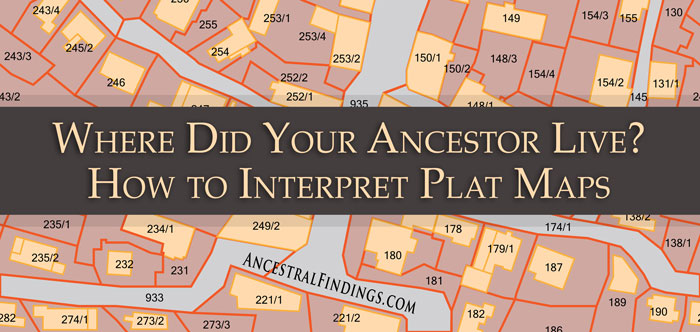
Homestead files use the Public Land Survey System, which describes land by township, range, section, and subdivisions of sections. This is not a street address. It is a grid based legal description. Once you learn to translate it, you can identify the exact parcel, locate it on historical plats, and compare it to the nearest towns, rail lines, rivers, and county boundaries of the period.
This matters because homesteading was often strategic. Families chose land based on access to water, markets, transportation, and community ties. The legal description lets you test those factors with maps and local sources rather than guess.
Research workflow that stays rigorous but readable
A reliable way to work a homestead file is to treat it like a small archival collection.
First, extract every date and build a timeline. A single page with a date can anchor a whole year of a family’s movement.
Second, extract every person named, including witnesses and officials. Then search those people in the same place and period. This approach, sometimes called cluster research, is especially effective in frontier regions.
Third, translate the legal description into a map location. Use that location to pull county plat maps, tax lists, and nearby deed activity, then compare the neighborhood names to census enumeration districts and local histories.
This method is academically sound because it treats the file as evidence that must be contextualized, cross checked, and linked to other record sets. It is also simple enough for a general reader because it follows a straightforward sequence: time, people, place.
Why these records matter
Homestead case files document an exchange between an individual and the federal state, but they also preserve community. They capture who knew whom, who vouched for whom, and what counted as proof of a settled life. For genealogists, they can answer questions that are otherwise difficult: when an ancestor arrived, where they lived between census years, whether citizenship was obtained and where, how a household used the land, and why a family may have left. In that sense, homestead records are not only land documents. They are structured narratives, written in forms and sworn statements, that can bring an ancestor’s daily life into clearer view.